

8 Benefits of Metal Roofing for California Homes
Choosing a new roof is a major investment, and California homeowners have more to consider than appearance alone. Durability, energy efficiency, maintenance requirements, fire resistance, weather performance, and long-term value can all influence which roofing material is right for your home.
Metal roofing has become an attractive option for homeowners looking for long-lasting performance without sacrificing curb appeal. From its exceptional lifespan to its ability to reflect solar heat and withstand challenging weather, a professionally installed metal roof offers advantages that can continue for decades.
If you're considering a roof replacement, understanding the benefits of metal roofing—as well as its potential drawbacks—can help you decide whether it's the right investment for your California home.
1. Metal Roofs Offer Exceptional Longevity
One of the most significant benefits of metal roofing is its long service life. A quality metal roofing system can last for decades when properly installed and maintained, making it an appealing option for homeowners who want to minimize the likelihood of replacing their roof again in the near future.
A metal roof's actual lifespan will depend on several factors, including the type of metal and protective coating, installation quality, local environmental conditions, and ongoing maintenance.
While the initial investment may be higher than some conventional roofing materials, the longer lifespan of metal roofing can make it an attractive option when considering the total cost of owning and maintaining a roof over many years.
2. Metal Roofing Provides Excellent Durability
Your roof is constantly exposed to sun, rain, wind, temperature changes, and other environmental conditions. Metal roofing is designed to provide dependable protection against these elements.
Unlike roofing materials that can crack, curl, or deteriorate as they age, a properly installed metal roofing system can maintain its structural integrity for many years.
Metal roofing can provide resistance against:
- Heavy rain
- High winds
- UV exposure
- Temperature fluctuations
- Moisture
- Cracking and warping
Performance varies depending on the specific roofing system, installation, and environmental conditions, which is why choosing an experienced metal roofing contractor is important.
3. Metal Roofing Can Improve Energy Efficiency
California homeowners often look for ways to reduce the amount of heat entering their homes, particularly during warmer months.
Metal roofing can contribute to an energy-efficient roofing system because many metal roofing products reflect a portion of the sun's energy rather than absorbing it. Reflective finishes and coatings can further improve solar reflectance.
The roof itself is only one component of home energy efficiency. Insulation, attic ventilation, roof color, building orientation, and the specific roofing product all influence overall performance.
When these components work together, an energy-efficient metal roofing system can help reduce heat transfer through the roof and lessen the workload placed on a home's cooling system.
4. Metal Roofs Offer Excellent Fire Resistance
Fire resistance is an especially important consideration for many California homeowners. Metal is a noncombustible roofing material, which can make it an attractive option for properties where wildfire resilience is a priority.
However, roofing material is only one part of a home's overall fire resistance. The complete roof assembly, underlayment, vents, gutters, surrounding vegetation, and installation details can all influence how a home performs when exposed to wildfire conditions.
Homeowners in wildfire-prone areas should consider the entire roofing system rather than selecting a material based on fire resistance alone. An experienced roofing contractor can help you understand which materials and roofing components are appropriate for your property and location.
5. Metal Roofing Performs Well in Challenging Weather
California weather conditions vary considerably depending on where you live. Homes may experience intense sunlight, strong winds, seasonal rain, coastal air, or significant temperature changes throughout the year.
Metal roofing systems are designed to perform in a variety of environmental conditions. Their durability makes them particularly appealing to homeowners looking for a roof that can provide dependable protection year after year.
Proper installation is critical to this performance. Flashing, fasteners, seams, penetrations, ventilation, drainage, and other roofing details all need to work together to create a durable roofing system.
6. Metal Roofs Require Relatively Little Maintenance
Another advantage of metal roofing is its relatively low maintenance requirements.
That doesn't mean a metal roof should simply be installed and forgotten. Like any roofing system, periodic inspections and preventative maintenance can help identify small issues before they develop into more significant problems.
Metal roof maintenance may include:
- Removing leaves, branches, and other accumulated debris
- Keeping gutters and drainage areas clear
- Checking flashing around roof penetrations
- Inspecting seams and fasteners where applicable
- Looking for damaged or deteriorating protective coatings
- Checking for signs of corrosion or physical damage
- Scheduling professional roof inspections when appropriate
Regular maintenance can help protect your investment and maximize the service life of your roofing system.
7. Modern Metal Roofing Offers Plenty of Design Options
Some homeowners still associate metal roofs with agricultural or industrial buildings, but today's residential metal roofing systems offer considerably more design flexibility.
Metal roofing is available in numerous colors, finishes, profiles, and styles. Standing seam metal roofing, for example, can provide a clean architectural appearance that works well with both contemporary and traditional homes.
Homeowners can select roofing that complements exterior siding, trim, windows, landscaping, and other architectural features.
As a result, choosing metal roofing doesn't necessarily mean sacrificing curb appeal in exchange for durability.
8. Metal Roofing Can Be a Sustainable Long-Term Choice
Metal roofing can also appeal to homeowners who prioritize sustainability.
Many metal roofing products contain recycled material, and metal itself can be recycled at the end of its useful life. Its longevity provides another environmental advantage: a roof that lasts longer may need to be replaced less frequently, reducing the amount of roofing material used over the lifetime of a home.
Reflective metal roofing products can also contribute to energy-efficiency goals by reducing solar heat absorption.
Metal Roof vs. Asphalt Shingles: What's the Difference?
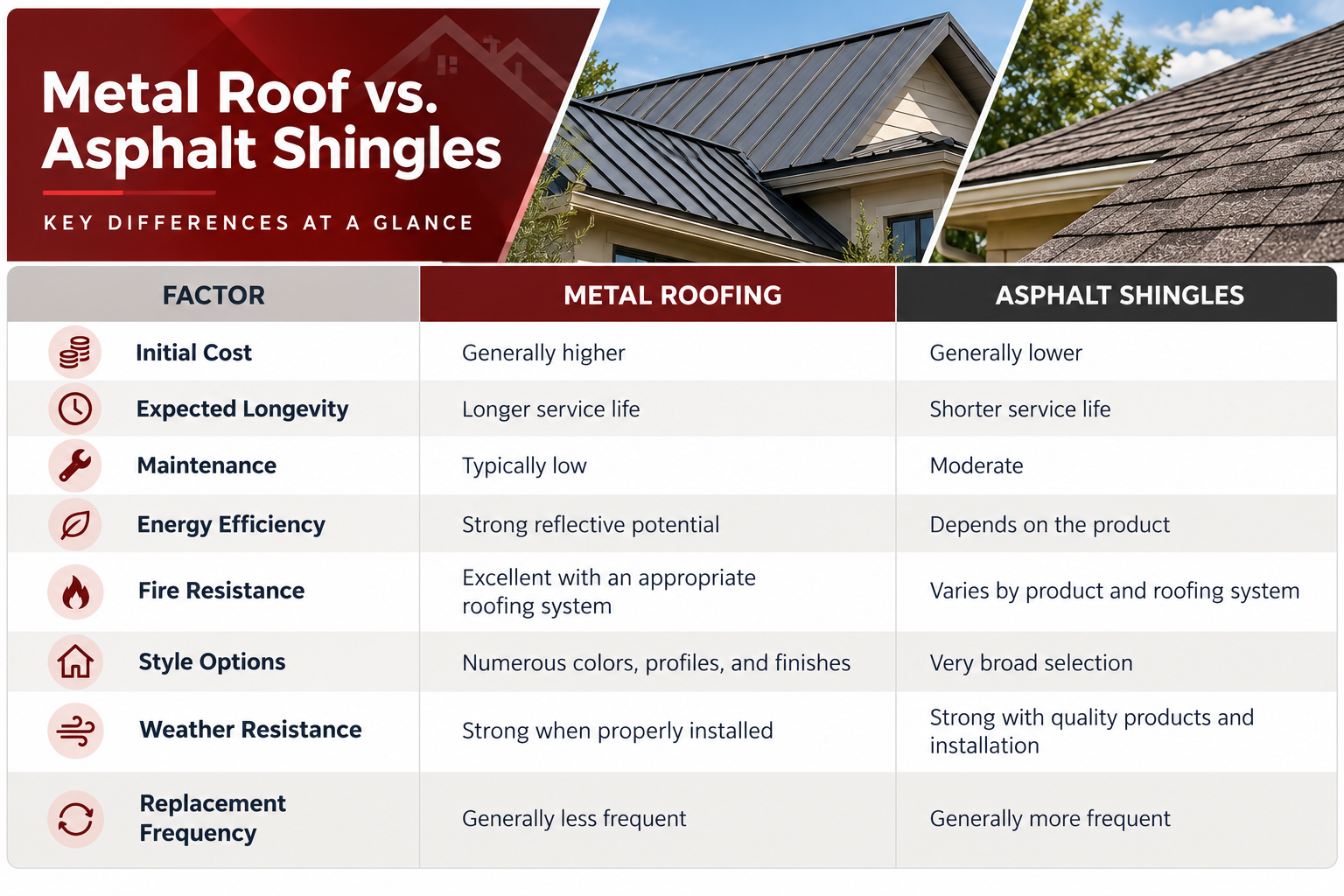
Metal roofing and asphalt shingles can both provide dependable protection when properly installed, but they have different characteristics. Understanding these differences can help homeowners determine which roofing material better fits their budget and long-term goals.
Neither roofing material is automatically the best choice for every home.
Asphalt shingles can be a practical choice for homeowners prioritizing a lower initial investment and a wide variety of styles. Metal roofing may be particularly attractive to homeowners who prioritize longevity, durability, energy efficiency, fire resistance, and reduced long-term maintenance.
Your budget, home design, location, expected length of homeownership, and long-term priorities should all factor into the decision.
Are There Any Disadvantages to Metal Roofing?
Although there are many benefits of metal roofing, homeowners should understand the potential drawbacks before making a decision.
Higher Initial Cost
Metal roofing generally requires a larger upfront investment than standard asphalt shingles. However, homeowners should consider both initial cost and long-term value. A longer lifespan and reduced replacement frequency may help offset some of the initial expense over time.
Specialized Installation
Metal roofing requires specific installation techniques, and the quality of the installation can significantly affect performance. Working with a roofing contractor experienced with metal roofing systems is important.
Noise Concerns
One of the most common questions homeowners have is whether metal roofs are noisy when it rains.
A residential metal roof is not simply a sheet of metal placed directly above the living space. Roof decking, underlayment, attic space, and insulation can all help reduce the amount of outside noise that reaches the home's interior.
Repair Considerations
Metal roofing can require different repair techniques than asphalt shingles. The type of metal roofing system and location of the damage will determine the appropriate repair method.
These factors don't necessarily make metal roofing a poor choice. Instead, they illustrate why homeowners should compare the complete costs, advantages, and expected lifespan of different roofing materials before making a decision.
Is a Metal Roof Worth It?
For many homeowners, the answer can be yes—particularly when long-term performance is a priority.
The higher initial cost of metal roofing should be weighed against potential benefits such as:
- Long service life
- Strong weather resistance
- Reduced maintenance requirements
- Energy-efficient characteristics
- Fire resistance
- Design versatility
- Less frequent roof replacement
Homeowners planning to remain in their homes for many years may place greater value on these long-term advantages.
Ultimately, whether metal roofing is worth the investment depends on your budget, property, location, and priorities. A professional roof evaluation can help you compare materials based on the actual needs of your home rather than relying on a one-size-fits-all recommendation.
Frequently Asked Questions About Metal Roofing
How long does a metal roof last?
A properly installed and maintained metal roof can provide decades of service. Actual lifespan varies depending on the metal, protective finish, installation, environmental conditions, and maintenance.
Is metal roofing good for California homes?
Metal roofing can be a strong option for California homes because of its durability, reflective potential, fire-resistant characteristics, and ability to perform in a variety of climates. The best roofing system will depend on the home's location and specific environmental conditions.
Are metal roofs energy efficient?
Metal roofing can contribute to an energy-efficient roofing system, particularly when reflective surfaces or coatings are used. Insulation, ventilation, roof color, and other building components also affect overall home energy efficiency.
Are metal roofs fire resistant?
Metal is a noncombustible material and can provide excellent fire resistance as part of an appropriately designed roofing system. Homeowners should remember that wildfire resilience depends on the complete roof and home exterior—not the roofing material alone.
Are metal roofs noisy when it rains?
Modern residential metal roofing systems are installed over roof decking and underlayment, while attic space and insulation can further reduce sound. As a result, rain noise may be much less noticeable inside the home than many homeowners expect.
Does metal roofing require a lot of maintenance?
Metal roofing generally requires relatively little maintenance, but periodic inspections are still recommended. Keeping the roof and drainage system clear of debris and addressing damage promptly can help extend its service life.
Can metal roofing be installed over an existing roof?
In some situations, metal roofing may be installed over an existing roofing system. However, whether this is appropriate depends on the condition of the existing roof and decking, structural considerations, local building requirements, manufacturer specifications, and the type of roofing system being installed. A professional roof inspection should be performed before making this decision.
Is metal roofing more expensive than asphalt shingles?
Metal roofing typically has a higher initial cost than standard asphalt shingles. However, homeowners should also consider expected lifespan, maintenance, energy efficiency, and replacement frequency when comparing the long-term costs of the two materials.
Is Metal Roofing Right for Your California Home?
Metal roofing can be an excellent long-term investment for homeowners who prioritize durability, energy efficiency, low maintenance, fire resistance, and lasting curb appeal. However, the right roofing system ultimately depends on your home, budget, location, and long-term goals.
Alta-Cal Roofing has more than four decades of experience helping California homeowners choose roofing solutions suited to their properties and needs. Whether you're considering metal roofing for a roof replacement or need help maintaining an existing metal roof, our team can evaluate your roof, explain your options, and help you make an informed decision.


